 training
 Perfect Your Workout Form: A Video Guide
Why Form Is Everything
You can follow the most carefully designed training program in the world, but if your form is off, you will plateau faster, risk injury, and leave serious gains on the table. Technique is not something you graduate from — it is something you continuously refine.
This guide combines written instructions with video demonstrations so you can see exactly what correct movement looks like in practice.
The Big Four Compound Movements
Compound movements recruit multiple muscle groups simultaneously and form the backbone of any effective strength program. Master these four and you have a solid foundation for life.
1. The Squat
The squat is the king of lower body exercises. When done correctly, it builds powerful legs, a strong posterior chain, and bulletproof knees.
Key form cues:
- Feet shoulder-width apart with toes slightly flared outward (10–30 degrees)
- Bar sits on the upper traps (high bar) or lower traps (low bar) — not on the neck
- Chest up, neutral spine throughout the entire movement
- Drive knees outward in line with toes on descent and ascent
- Break at the hips and knees simultaneously
- Reach full depth (thighs parallel to floor or below)

How to Squat with Perfect Form — Complete Tutorial
Common mistakes to avoid:
- Knees caving inward (valgus collapse)
- Heels rising off the floor
- Excessive forward lean causing the bar to drift
- Rushing through the eccentric (lowering) phase
2. The Deadlift
No exercise builds raw posterior chain strength like the conventional deadlift. It engages your hamstrings, glutes, spinal erectors, lats, and grip simultaneously.
Key form cues:
- Bar over mid-foot, roughly 1 inch from your shins
- Hip-width stance, toes pointing forward or slightly out
- Grip just outside your legs (double overhand or mixed grip)
- Hinge at the hips, not the lower back — “push the floor away”
- Lat engagement: imagine trying to put your shoulder blades in your back pockets
- Lock out hips and knees simultaneously at the top — avoid hyperextension

Deadlift Form Guide — Conventional and Romanian Variations
Common mistakes to avoid:
- Rounding the lower back under load
- Jerking the bar off the floor instead of building tension first
- Bar drifting forward away from your body
- Over-extending at the top (slamming hips forward)
3. The Bench Press
The bench press measures upper body pushing strength and builds chest, anterior deltoids, and triceps when performed with proper technique.
Key form cues:
- Feet flat on the floor or heeled in if mobility demands it
- Natural arch in the lower back — not extreme powerlifting arch for general training
- Retract and depress shoulder blades into the bench — this protects your shoulders
- Bar path is slightly diagonal: touches lower chest, presses back toward face
- Elbows at 45–75 degrees from torso — not flared to 90 degrees
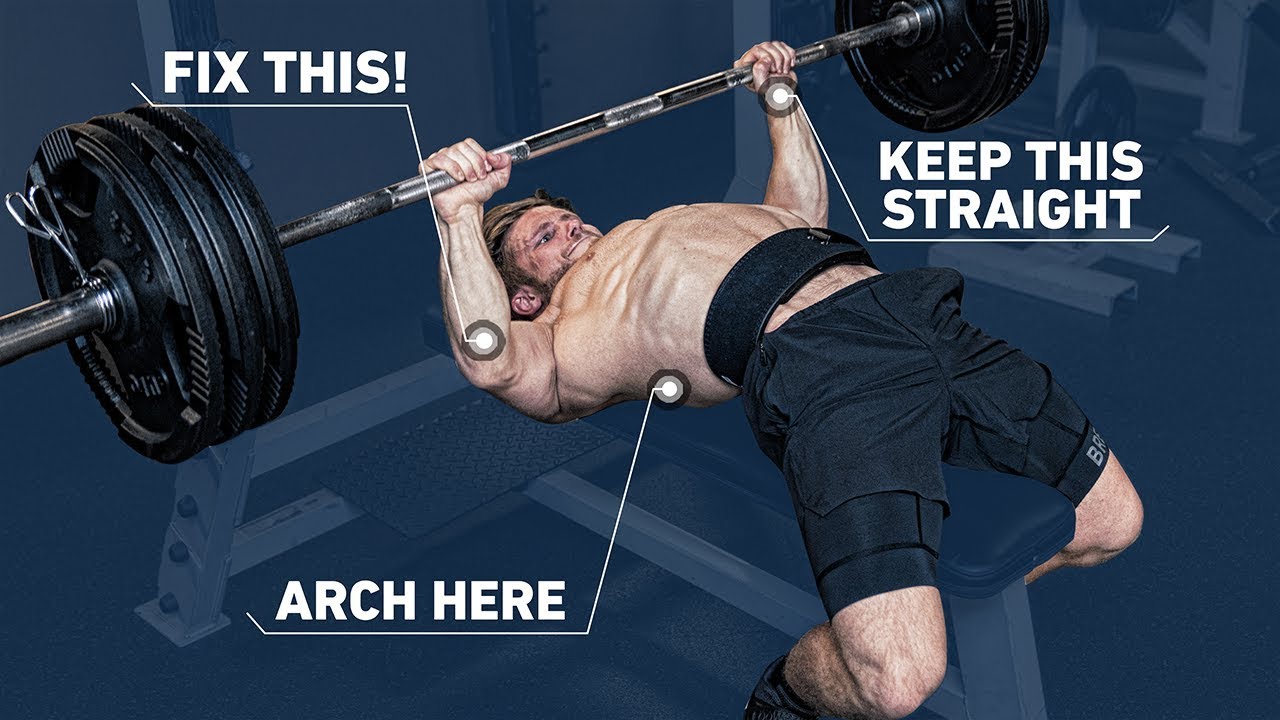
Bench Press Form — How to Press Safely and Effectively
Common mistakes to avoid:
- Bouncing the bar off your chest
- Flaring elbows to 90 degrees, placing stress on shoulder capsule
- Letting shoulder blades protract and rise during the press
- Uneven hand placement on the bar
4. The Overhead Press
The overhead press builds shoulder strength and stability while also engaging your core to prevent excessive lumbar extension.
Key form cues:
- Bar starts at collarbone height in front of neck
- Grip slightly wider than shoulder-width
- Core braced — do not hyperextend the lower back
- Press bar straight up, moving your face back slightly to allow bar to pass
- At lockout, bar should be directly over your base of support (mid-foot when standing)
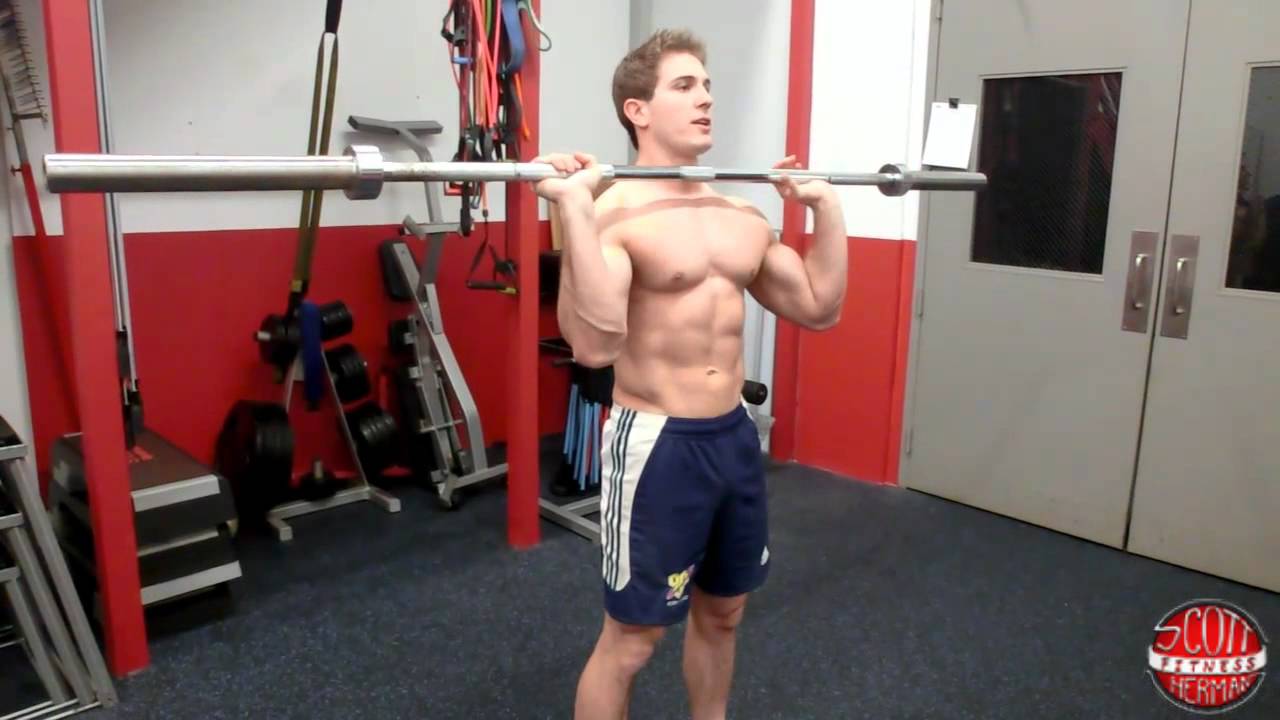
Overhead Press Tutorial — Strict Press Technique
Putting It All Together
Learning these movements takes time. Use lighter weights than you think you need and film yourself from the side to compare your form against the videos above. PushMeUp’s AI workout guidance watches your rep count and rest periods, but you are the quality control for your own technique.
A useful rule of thumb: if you cannot maintain form for the last two reps of a set, the weight is too heavy. Ego has no place in a long-term strength program.
Train consistently, prioritize recovery, and trust the process.

Sign in to join the discussion
Sign in